Laser and energy based skin treatments are often described using terms such as fully ablative, fractional ablative and non-ablative. While these terms sound technical, they simply describe how the treatment interacts with the skin and how much tissue is affected. Understanding these categories helps explain why some treatments deliver dramatic results but require significant downtime, while others offer gradual improvement with minimal recovery.
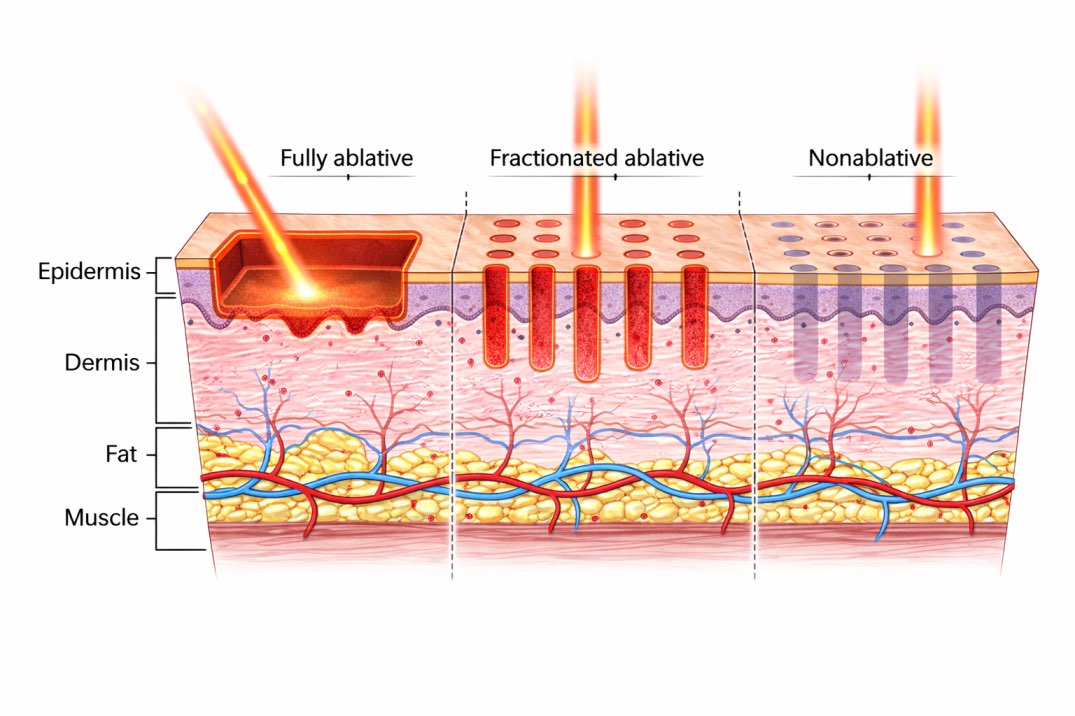
Fully ablative resurfacing removes the entire surface layer of skin across the treated area. The laser energy vaporises the outer layers of tissue and heats the deeper dermis, which stimulates collagen remodelling during healing.
Because the entire surface is treated, the skin must regenerate a new epidermal layer during recovery.
Fully ablative resurfacing can lead to significant improvement in:
• Deep wrinkles
• Advanced sun damage
• Severe textural changes
• Deep acne scarring
However, this approach involves the longest recovery period. Healing may take several weeks and redness can persist for longer while the skin rebuilds and remodels.
For this reason, fully ablative treatments are typically reserved for more advanced skin concerns and require careful patient selection.
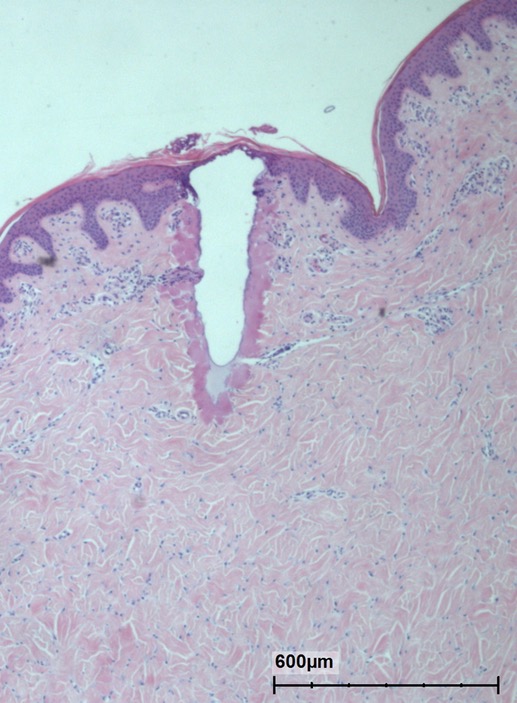
Fractional ablative resurfacing works differently. Instead of removing the entire surface layer, the laser creates thousands of microscopic columns of treated skin while leaving surrounding areas untouched.
These untreated areas act as reservoirs of healthy tissue that help the skin repair itself more quickly.
Fractional ablative treatments stimulate collagen remodelling while preserving portions of intact skin between treatment zones. This approach offers a balance between effectiveness and recovery time.
Fractional ablative resurfacing is commonly used for:
• Acne scarring
• Wrinkles and fine lines
• Uneven texture
• Sun damage
• Skin laxity
Recovery is typically shorter than with fully ablative resurfacing, although redness, swelling and peeling can still occur for several days.
Non-ablative treatments heat the deeper layers of the skin without removing the surface layer. Instead of vaporising tissue, these treatments deliver controlled thermal energy into the dermis to stimulate collagen production.
Because the outer skin remains intact, recovery time is usually minimal.
Non-ablative treatments are commonly used for:
• Early signs of ageing
• Mild skin laxity
• Subtle texture improvement
• General skin quality and maintenance
The trade off is that results tend to be more gradual. Multiple sessions are often required to achieve meaningful improvement.
These categories reflect a spectrum of intensity and recovery. Fully ablative treatments are the most aggressive but can deliver dramatic change. Fractional ablative treatments offer a balance between results and downtime. Non-ablative treatments prioritise minimal recovery with more gradual improvements.
The appropriate option depends on the individual’s skin condition, goals, tolerance for recovery and overall treatment plan.
In clinical practice, treatments are often tailored within these categories to match the skin and the outcome being sought.
-
Written by Dr Brandon Kober-Brown MBBS, ProfDipMensHlth, GCCM
Registered Medical Practitioner (General Registration)MED0002581903
Disclaimer: This article is intended for general educational purposes only and should not be taken as personal medical advice. It is not a substitute for a consultation with a registered medical professional. Suitability for PRP and other treatments varies between individuals and should be assessed by an appropriately qualified practitioner.

Potts Point Clinic
Shop Ground 2 / 46a Macleay Street Potts Point NSW 2011