Acne scarring develops as a result of inflammation and structural damage to the skin during active acne, leading to permanent changes in collagen architecture. Unlike other types of scarring, acne scars are caused by loss, distortion or abnormal repair of dermal tissue, which is why they require a specific and targeted treatment approach.
Acne scarring may present as indented, uneven or texturally irregular skin, and can persist long after active acne has resolved. The severity and pattern of scarring varies between individuals and is influenced by acne severity, duration, genetics, inflammation, skin type and previous treatments.
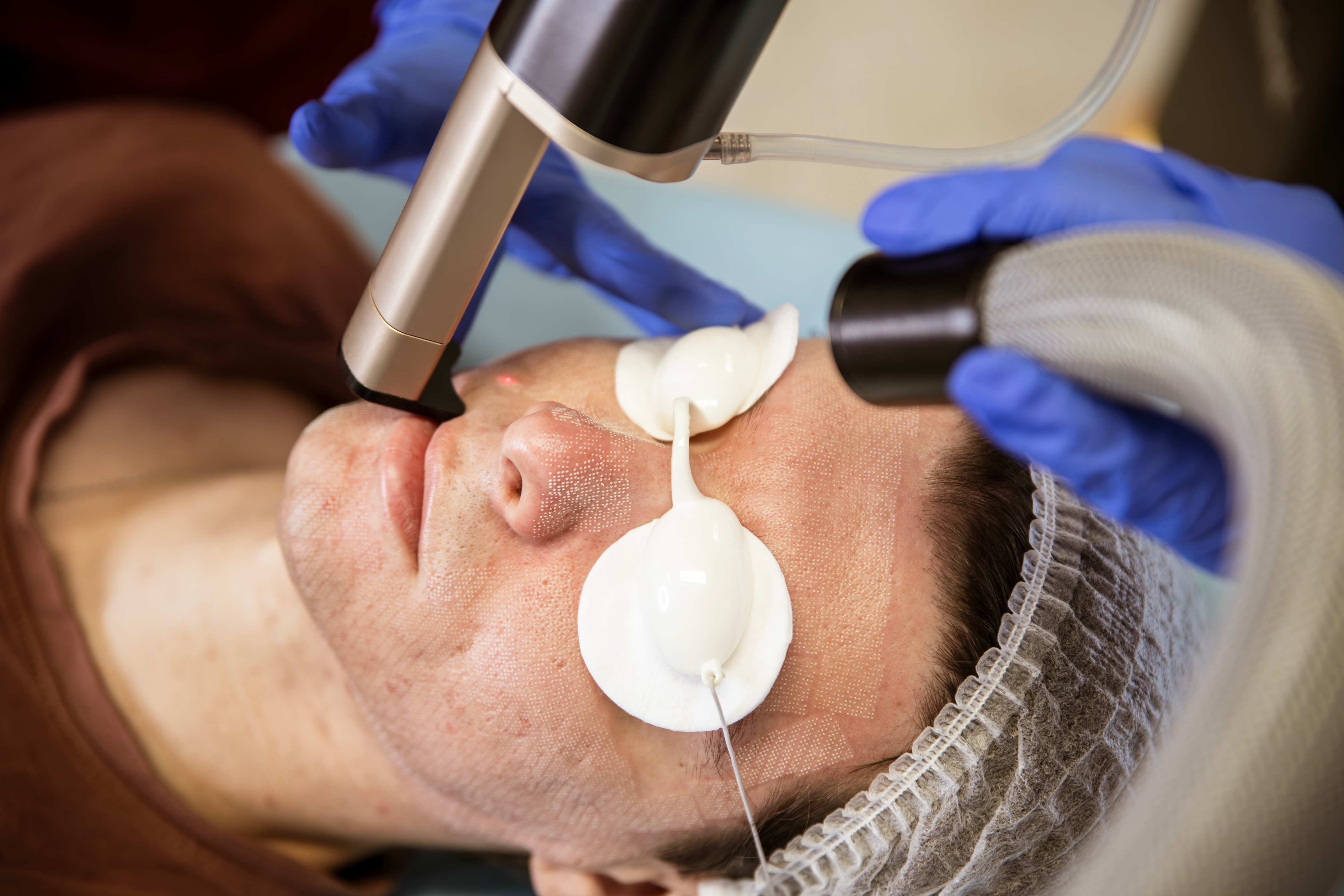
Laser acne scar revision using the Alma Hybrid platform focuses on remodelling damaged collagen, stimulating new collagen formation and improving overall skin texture, rather than complete scar removal.
During consultation, acne scars are assessed and classified, as different scar types respond differently to treatment. Common acne scar types include:
Accurate scar classification is essential to selecting the appropriate treatment depth, density and modality.
The Alma Hybrid platform combines ablative fractional CO₂ laser energy with non-ablative 1570 nm laser energy, allowing treatment to be tailored to both surface texture irregularities and deeper dermal scarring.
Laser acne scar revision works by:
Treatment parameters can be adjusted based on scar type, depth, skin type and downtime tolerance. In some cases, a staged or combination approach may be recommended.
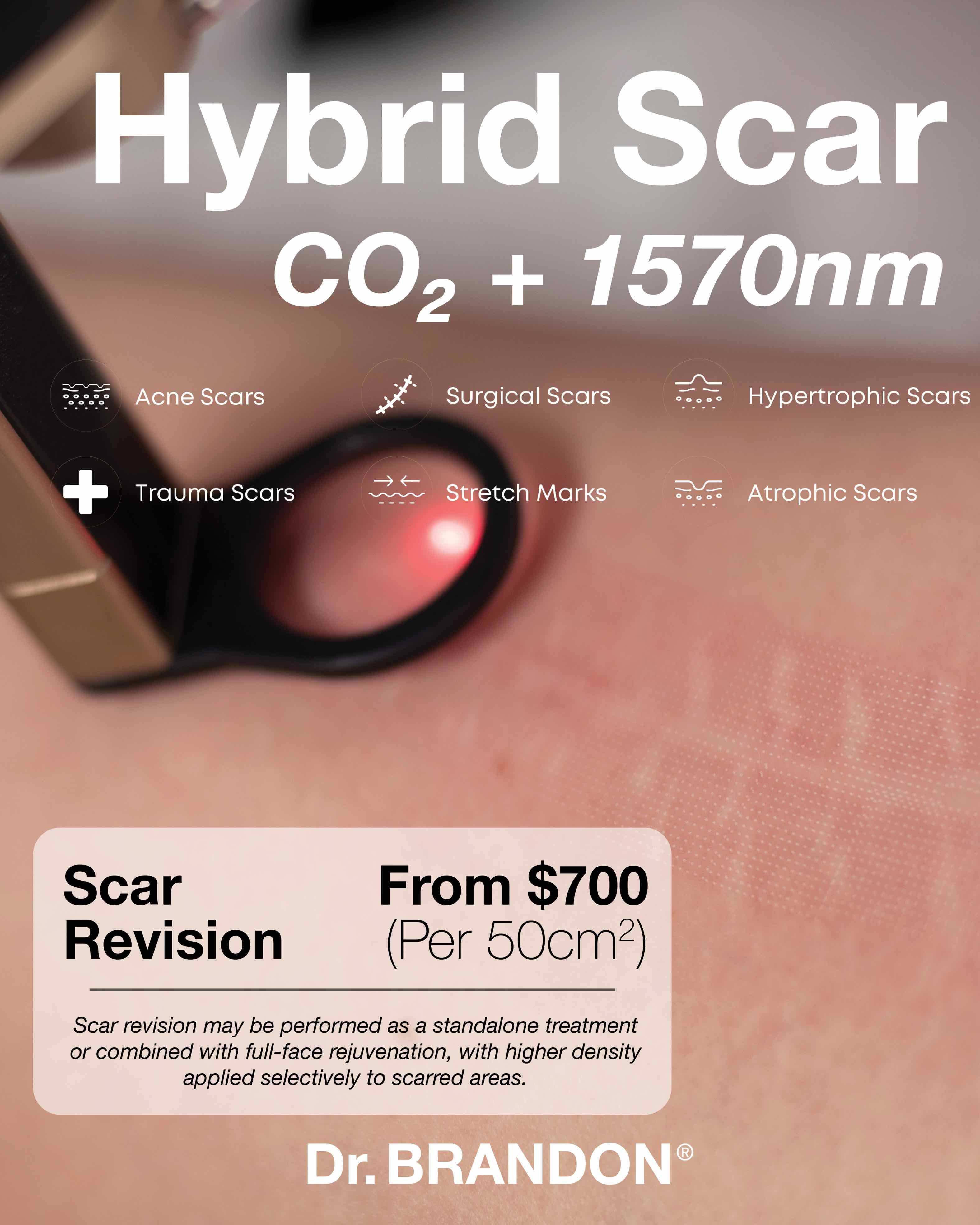
Acne scar revision may be performed as a standalone, scar-focused treatment, or in combination with full-face laser rejuvenation, with higher treatment density and depth selectively applied to areas of scarring.
Every acne scar revision treatment begins with a comprehensive medical and skin assessment. During consultation, Dr Brandon evaluates:
Active acne may need to be stabilised before scar revision is undertaken.
Prior to treatment, topical anaesthetic or local numbing may be used depending on treatment depth and coverage.
Laser energy is delivered in a controlled, fractional pattern across the affected areas. Treatment time varies depending on the extent of scarring, but most sessions are completed within 30–60 minutes.
Downtime varies depending on treatment intensity and scar severity. Patients may experience:
Recovery typically ranges from 3 to 7 days, though deeper treatments may require longer healing periods. Collagen remodelling continues for several months following treatment.
Acne scar revision is a gradual, progressive process. Improvements may include:
Most patients require a series of treatments to achieve meaningful improvement. The number and spacing of sessions depend on scar type, severity and individual skin response.

Unlike traditional laser devices that rely on a single wavelength, the Alma Hybrid integrates:
This allows treatments to be performed in ablative mode, non-ablative mode or true hybrid mode, depending on clinical indication. Depth, density and energy delivery can all be precisely adjusted, making Alma Hybrid suitable for everything from light skin refreshing to deeper scar and texture correction.
Prior to treatment, topical anaesthetic or local numbing may be used where appropriate. The laser is then applied in a controlled, fractional pattern across the targeted areas.
The dual-laser approach allows:
Treatment duration varies depending on the area treated and the depth of resurfacing required. Most patients are in and out within one hour.
Alma Hybrid laser resurfacing is a medical procedure and carries risks, including but not limited to:
Patients with the following require special consideration and may not be suitable:
Alma Hybrid treatments with Dr Brandon are delivered within a doctor-led, anatomy-driven and conservative framework, prioritising:
I currently practice at;
CLEON by Dr Brandon
Shop Ground 2/46a Macleay Street, Potts Point NSW 2011
Clinic Phone: 0438 163 638

Potts Point Clinic
Shop Ground 2 / 46a Macleay Street Potts Point NSW 2011