For many years, aesthetic medicine has largely focused on replacing what time has taken away.
Lost volume was treated with filler. Wrinkles were treated with anti-wrinkle injections. While these treatments remain valuable and continue to have an important role, there has been a noticeable shift in recent years towards a different way of thinking.
Rather than simply replacing lost volume or masking signs of ageing, regenerative aesthetics aims to improve the quality and function of the tissue itself.
This is one of the areas of aesthetic medicine that I find most exciting.
At its core, regenerative aesthetics focuses on stimulating the body's own repair and renewal processes.
The goal is not necessarily to change the shape of the face or create dramatic alterations. Instead, the aim is to improve skin quality, support tissue health and encourage the body to regenerate its own collagen, elastin and extracellular matrix.
In simple terms, traditional aesthetic treatments often work by adding something to the face. Regenerative treatments aim to encourage the body to improve itself.
Of course, no treatment can stop ageing entirely. However, some treatments may help improve the quality of ageing by supporting healthier tissue over time.
One of the biggest lessons the industry has learned over the past decade is that ageing is not simply a problem of volume loss.
As we age, our skin becomes thinner, collagen production slows, elastin fibres become damaged and tissue quality gradually declines. These changes can affect how the face looks and behaves long before significant volume loss becomes apparent.
This is why some patients continue to feel they look tired or aged despite having filler.
In many cases, the issue is not a lack of volume. It is a decline in tissue quality.
As a result, modern aesthetic medicine is increasingly focusing on skin health, collagen stimulation and regenerative approaches alongside more traditional treatments.
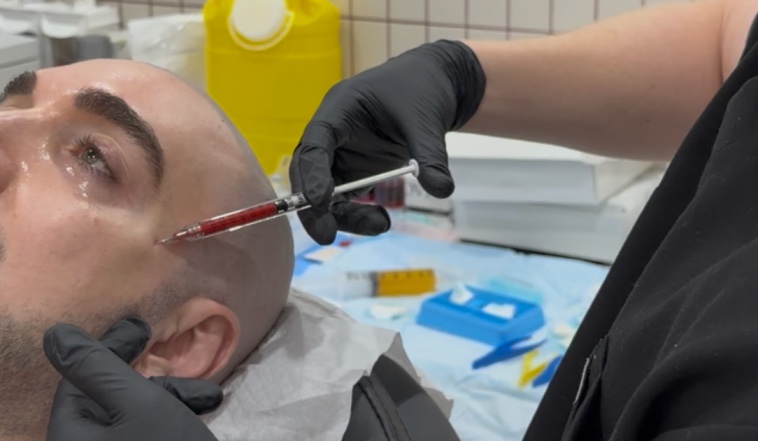
Platelet-rich plasma, commonly known as PRP, is one of the earliest regenerative treatments to gain widespread popularity.
PRP involves collecting a small sample of the patient's blood and concentrating the platelets before reintroducing them into the skin or scalp.
Platelets contain numerous growth factors that play an important role in wound healing and tissue repair.
In aesthetic medicine, PRP is commonly used to support skin quality, improve overall skin health and assist with hair restoration treatments.
One of the reasons PRP remains attractive is that it utilises the patient's own biological material rather than introducing a synthetic product.
Polynucleotides are among the most discussed regenerative treatments in aesthetic medicine today.
Derived from highly purified DNA fragments, polynucleotides are thought to support tissue repair and create an environment that encourages cellular regeneration.
Unlike traditional fillers, polynucleotides are not designed to create volume.
Instead, they are primarily used to improve skin quality, hydration and tissue health. They are particularly popular in areas where skin quality is often a greater concern than volume loss, such as around the eyes.
While research in this field continues to evolve, early clinical experience has generated significant interest in their potential role within regenerative medicine.
One of the more recent developments in regenerative aesthetics is the emergence of treatments designed to support ageing fat compartments rather than simply filling them.
Profhilo Structura is an example of this evolving approach.
Rather than acting as a traditional volumising filler, the treatment is designed to support superficial fat compartments and improve tissue quality through highly purified hyaluronic acid.
This represents a broader trend within aesthetic medicine: moving away from simply adding volume and towards supporting the tissues that naturally contribute to youthful facial structure.
Another important category within regenerative aesthetics is biostimulation.
Biostimulatory treatments are designed to encourage the body to produce its own collagen over time.
This may be achieved through injectable treatments, energy-based devices or laser technologies that create a controlled healing response within the tissue.
Unlike traditional fillers, which provide an immediate volumising effect, biostimulatory treatments often work gradually as the body's natural remodelling processes occur.
For patients seeking subtle, progressive improvements, this can be an appealing approach.
Regenerative treatments are not intended to replace every traditional aesthetic procedure.
Rather, they provide another tool that can be incorporated into a broader treatment strategy.
Patients who may benefit include those who are noticing early signs of ageing, declining skin quality, reduced elasticity or a general loss of skin vitality. They may also appeal to individuals seeking gradual, natural-looking improvements rather than significant changes in facial shape or volume.
In many cases, regenerative treatments are combined with other modalities to create a more comprehensive approach to facial rejuvenation.
I do not believe regenerative aesthetics represents the end of traditional fillers, anti-wrinkle treatments or other established procedures. These treatments continue to have an important role and, for the right patient, can produce excellent outcomes.
What regenerative medicine offers is a broader way of thinking about ageing.
Rather than focusing exclusively on replacing lost volume or treating visible signs of ageing, regenerative treatments aim to support the health and function of the tissue itself. In many cases, this means improving skin quality, stimulating collagen production and encouraging the body's own repair processes.
The future of aesthetic medicine is unlikely to be defined by a single treatment or technology. Instead, it will be shaped by a more personalised approach that combines structural treatments, skin health and regenerative therapies where appropriate.
Ultimately, the goal remains the same: helping patients age well while maintaining results that look natural, balanced and authentic to them.
-
Written by Dr Brandon Kober-Brown MBBS, ProfDipMensHlth, GCCM
Registered Medical Practitioner (General Registration) MED0002581903
Disclaimer: This article is intended for general educational purposes only and should not be taken as personal medical advice. It is not a substitute for a consultation with a registered medical professional. Suitability for skin and other treatments varies between individuals and should be assessed by an appropriately qualified practitioner.


Potts Point Clinic
Shop Ground 2 / 46a Macleay Street Potts Point NSW 2011