Male aesthetics has exploded over the last few years. And honestly? About time!

Men are becoming far more comfortable looking after their appearance, investing in their skin, addressing insecurities, and wanting to look healthier, sharper, fresher, or less tired without pretending they “just drink more water now.”
But treating men aesthetically is not simply a matter of taking treatments designed for women and applying them to a male face.
Male facial aesthetics is genuinely different.
Different anatomy.
Different ageing patterns.
Different aesthetic goals.
Different psychology around treatment.
And very different things can look “natural” on a male face compared to a female face.
This is where understanding masculine facial structure becomes incredibly important.
Because overfeminising a male face accidentally is one of the fastest ways to create results that feel “off.”
Even when technically well done.
This is probably the biggest difference.
Most male patients are not walking into clinic asking to look:
Usually men want to look:
And importantly:
Most men still want to look masculine.
The goal is rarely to erase character from the face.
In fact, many men actually suit some degree of:
A completely frozen, overly filled male face often looks uncanny very quickly.
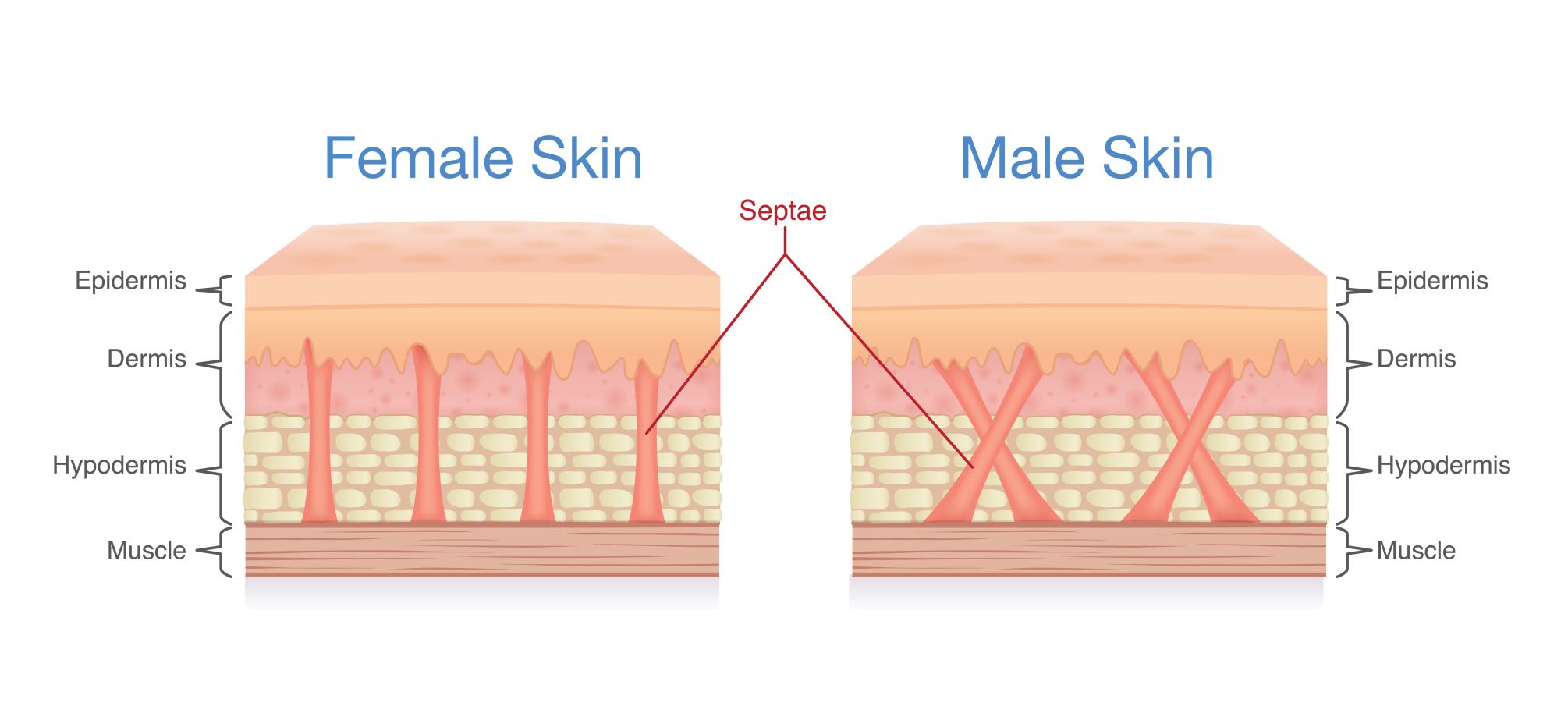
Male faces are structurally different from female faces in several important ways.
Generally speaking, men tend to have:
Whereas female faces are often characterised by:
This matters enormously when planning treatments.
Because techniques that look beautiful on a female face can sometimes unintentionally feminise a male face if copied directly.
Not surprisingly, the male jawline gets a lot of attention.
A strong jawline is heavily associated with:
But the internet has completely lost its mind about this lately.
Every second bloke online suddenly wants a jawline sharp enough to cut glass.
That’s not always realistic.
Or attractive.
A good male jawline should generally look:
Not like you’ve smuggled Lego blocks under the skin.
The approach to male jawline work is usually more structural and angular compared to female contouring, which often aims for softer transitions and curvature.
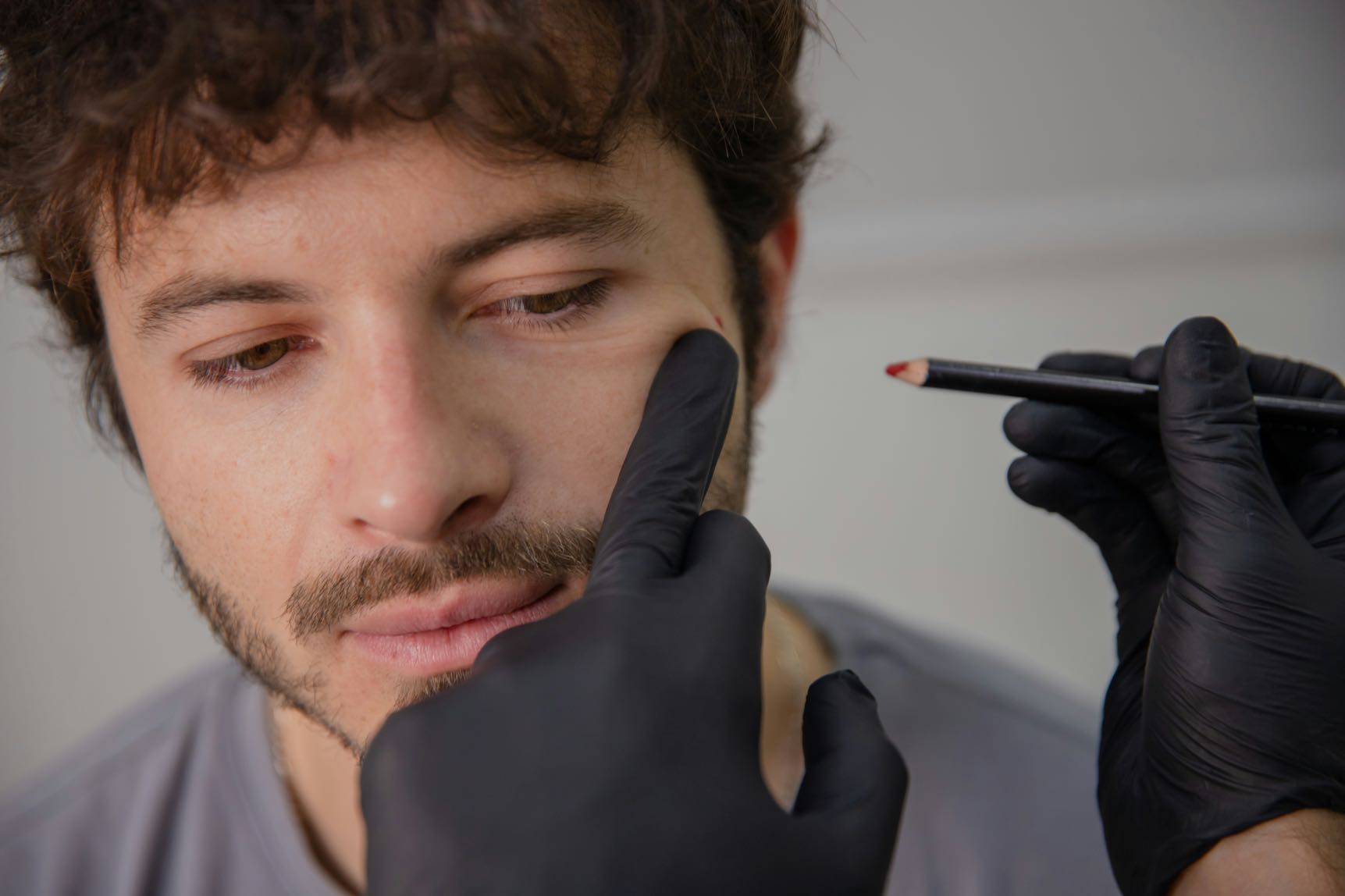
Male ageing patterns are different too.
Men commonly experience:
And because men often have stronger muscles, anti-wrinkle treatments can behave differently as well.
Male muscles are usually:
Which means treatment dosing and planning often differs significantly.
A tiny amount of product that softens movement beautifully in one patient may do absolutely bugger all in another.
One thing I’ve noticed repeatedly is that male patients are often incredibly conservative initially.
Many are nervous even attending the consultation.
Some have never had a cosmetic treatment before. Others have spent years thinking about it privately before finally booking.
And most are terrified of looking obvious.
That fear is valid.
Because bad male aesthetic work stands out immediately.
The ideal male aesthetic result is usually:
“You look good mate, have you lost weight or something?”
Not:
“Why do you suddenly look like a filtered Instagram influencer?”
Subtlety matters enormously in male aesthetics.
A lot of men initially focus purely on structure:
But skin quality often makes one of the biggest differences overall.
Sun damage, redness, enlarged pores, acne scarring, rough texture, dehydration, and pigmentation can all contribute heavily to looking older or more tired.
And honestly, some men get more noticeable overall improvement from:
Than they do from adding volume.
Healthy skin changes the entire face.
It reflects light better.
Looks fresher.
Looks cleaner.
Looks healthier.
And importantly... still looks masculine!
This is where a lot of clinics get it wrong.
Masculine aesthetics should not mean:
Because once a male face becomes overfilled, it often starts losing the very structural definition it was trying to create.
Puffy does not equal masculine.
Neither does looking permanently surprised.
The best male aesthetic work usually goes unnoticed by everyone except the patient.
Men often approach cosmetic medicine differently emotionally.
Women have historically had more open conversations around aesthetics. Men, on the other hand, are often still navigating:
Many male patients don’t even tell their friends or partners they’re attending clinic.
Which is why creating a calm, professional, non-salesy environment matters so much.
Men generally want:
Not an aggressive sales pitch and a ring light in their face the second they walk through the door.
Male aesthetics is not about making men look “pretty.”
It’s about understanding masculine anatomy, proportion, ageing, and psychology properly.
The best male aesthetic outcomes are usually:
Because most men don’t want to look like a different person.
They just want to look:
-
Written by Dr Brandon Kober-Brown MBBS, ProfDipMensHlth, GCCM
Registered Medical Practitioner (General Registration)MED0002581903
Disclaimer: This article is intended for general educational purposes only and should not be taken as personal medical advice. It is not a substitute for a consultation with a registered medical professional. Suitability for skin and other treatments varies between individuals and should be assessed by an appropriately qualified practitioner.

Potts Point Clinic
Shop Ground 2 / 46a Macleay Street Potts Point NSW 2011