Collagen supplements have become one of the biggest beauty trends of the past decade. They are everywhere, from powders in your morning smoothie to gummies that promise glowing skin in eight weeks. The marketing is polished, the packaging looks expensive and the claims sound impressive.
.jpg)
But do they actually work for your skin in the way they are advertised? The short answer is…maybe… in some situations, and not really in others.
The issue isn’t absorption. It’s what your skin actually does with it.
People in the comments on my TikTok were quick to point out that small collagen fragments, like dipeptides Pro-Hyp and Hyp-Gly, can be absorbed into the bloodstream. I agree. That part isn’t controversial. The misunderstanding begins when people assume those peptides head straight to the skin and instantly turn into new collagen.
Your body doesn’t work like that. It won’t build collagen just because the ingredients are floating around. It needs a biological signal that tells the skin repair or remodelling is required.
Think of it like baking a cake. Having flour, sugar and eggs sitting in the cupboard doesn’t magically produce a cake. You still have to do the work. Your skin is the same. Without stimulation, nothing happens.
That stimulation comes from fibroblasts.
Fibroblasts need a reason to build new collagen
Fibroblasts are the main cells involved in producing collagen and elastin. They are responsive to certain forms of stimulation, and without that stimulation they remain in a low activity mode. This is the key reason why many people take collagen supplements for months without seeing meaningful changes in skin quality.
Your skin will only build new collagen when it has a reason to do so. Extra amino acids do not provide that reason. They simply provide the raw material.
How to actually stimulate fibroblasts
There are three broad ways the skin is stimulated to form new collagen.
Mechanical stimulation
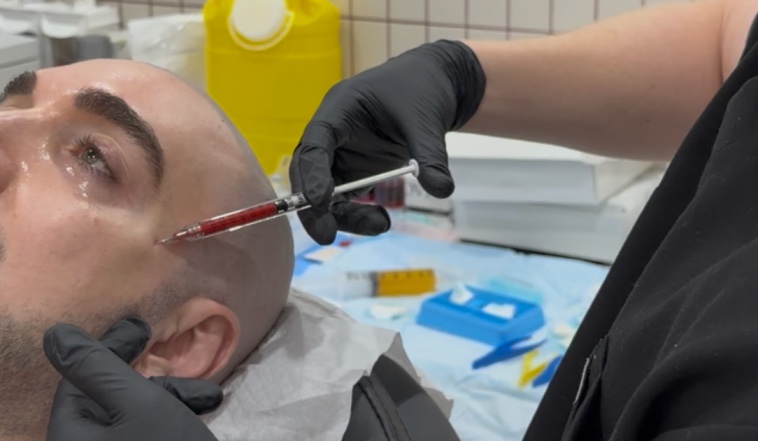
Treatments like skin needling and fractional laser create controlled micro-injury. This prompts the skin to enter a repair cycle, and during this cycle fibroblasts increase collagen production.
Biostimulatory treatments
Certain injectables and energy based devices work by encouraging fibroblasts to increase their output. These are usually performed in clinic and are designed for targeted collagen remodelling.
Biochemical pathways
Topical ingredients such as retinoids can influence how fibroblasts behave. Retinoic acid, for example, interacts with receptors that increase cellular turnover and support new collagen formation.
All three methods have decades of clinical evidence behind them. They provide the biological trigger that supplementation alone does not.
.jpg)
Where collagen supplements fit in
Collagen supplements can support the collagen building process but only when the skin is already in a stimulated or remodelling state. Think of them as additional building blocks. Useful, but not meaningful on their own.
If someone is deficient in protein or has a low dietary intake, supplements may help. But if a person is healthy, eating enough protein and not stimulating their skin at all, the likelihood of major visible improvement is low.
So are collagen supplements a holy grail or a marketing gimmick?
They are neither. They are not magic, but they are also not useless. They sit somewhere in the middle. They can complement genuine collagen stimulation, but they do not replace the treatments and skincare that actually trigger your fibroblasts to work.
Collagen supplements can be a supportive addition to a well structured routine. They are simply not the main event.
-
Written by Dr Brandon Kober-Brown MBBS, ProfDipMensHlth, GCCM
Registered Medical Practitioner (General Registration)MED0002581903


Potts Point Clinic
Shop Ground 2 / 46a Macleay Street Potts Point NSW 2011