Retinoids are often talked about as if stronger automatically means better. Higher percentages, prescription strength, faster results. In reality, this mindset is one of the most common reasons people fail with retinoids altogether. The most effective retinoid is not the strongest one. It is the one you can use consistently without damaging your skin barrier.

Retinoids increase cellular turnover and influence gene expression within skin cells. They stimulate collagen production, improve pigment distribution, normalise how pores shed cells and reduce enzymes that break down collagen.
To do this, retinoids push the skin into a more active state. That activity is what delivers results, but it is also what creates irritation when the skin is not able to tolerate the pace.
Stronger retinoids deliver more active retinoic acid to the skin more quickly. This accelerates cell turnover before the skin barrier has had time to adapt.
Common signs of retinoid irritation include:
• Redness
• Burning or stinging
• Flaking and peeling
• Tightness
• Increased sensitivity
• Breakouts caused by barrier disruption
This is not always an allergy or intolerance. Often, it is simply too much, too fast.
When irritation is persistent, the skin barrier becomes compromised. A damaged barrier loses water more easily, becomes inflamed and reacts unpredictably to products that were previously tolerated.
At this point, people often stop retinoids altogether or cycle through products, never allowing the skin to stabilise. This is where long term benefits are lost.
A retinoid that cannot be used consistently does not deliver collagen stimulation, pigment improvement or acne control. Consistency matters more than strength.
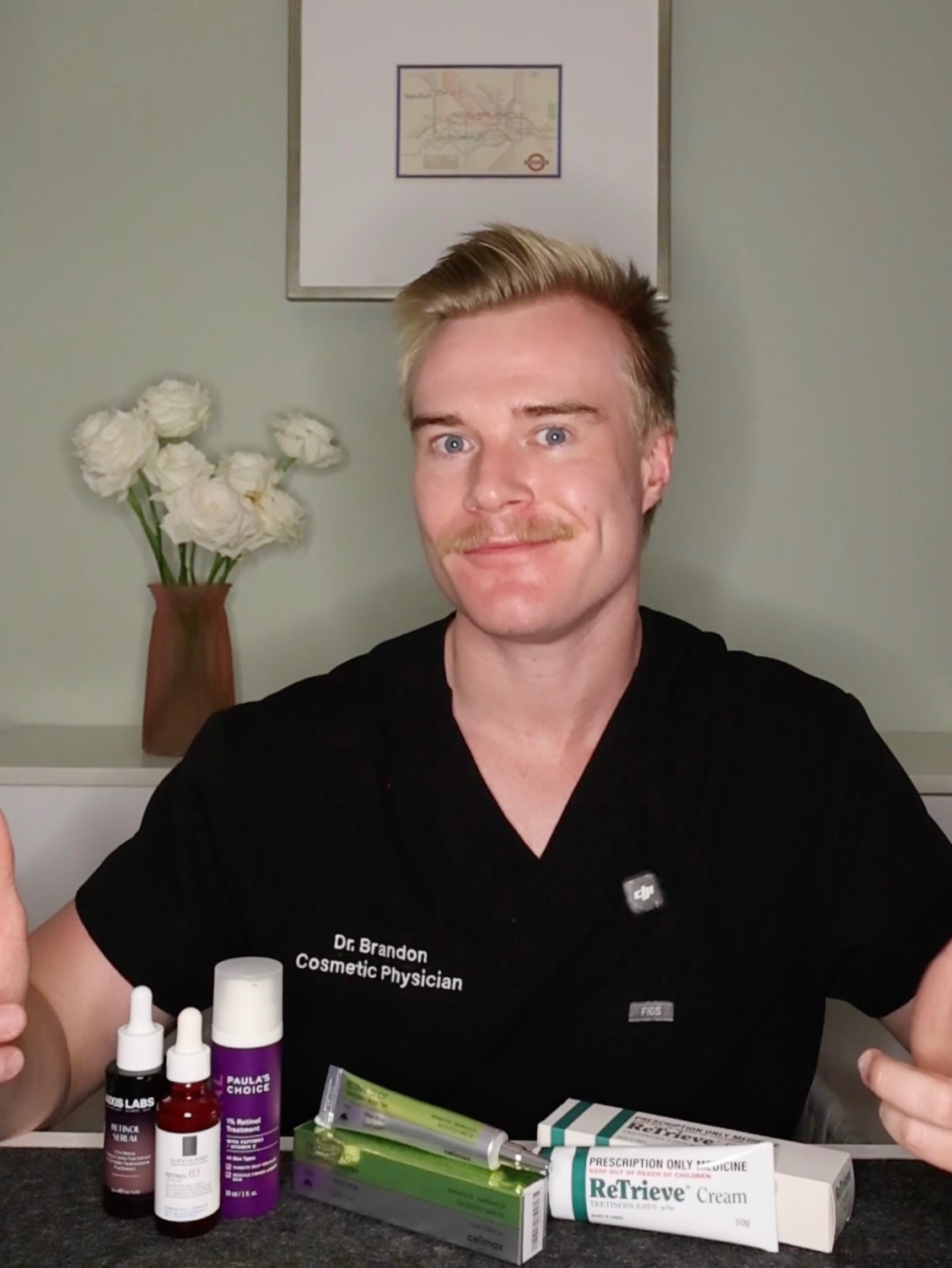
Lower strength retinoids or gentler formulations allow the skin to adapt gradually. Over time, the skin increases its tolerance and can often achieve similar long term outcomes without repeated irritation.
This is especially important for people with:
• Sensitive skin
• Rosacea prone skin
• Eczema history
• Barrier dysfunction
• Active acne with inflammation
• Those using other active ingredients
Using a retinoid two or three nights per week consistently for months is more effective than using a strong retinoid sporadically and constantly stopping due to irritation.
Frequency, formulation and skin support determine success more than headline strength.
Some mild adjustment symptoms are normal early on, but ongoing irritation is not a requirement for results.
Smart retinoid use includes:
• Starting slowly
• Using small amounts
• Applying to dry skin
• Supporting the barrier with moisturiser
• Adjusting frequency before increasing strength
This approach allows the skin to remodel without unnecessary inflammation.
Prescription strength retinoids are valuable for certain skin concerns, including acne, significant sun damage and stubborn pigmentation. They should be introduced thoughtfully and under medical guidance, not as a default starting point.
The best retinoid is not the strongest one. It is the one your skin can tolerate and use consistently over time. Results come from sustained biological signalling, not from short bursts of irritation.
Healthy skin responds better, heals better and ultimately looks better.
-
Written by Dr Brandon Kober-Brown MBBS, ProfDipMensHlth, GCCM
Registered Medical Practitioner (General Registration)MED0002581903
Disclaimer:This article is intended for general educational purposes only and should not be taken as personal medical advice. It is not a substitute for a consultation with a registered medical practitioner. Prescription only medicines are classified as prescription only for a reason. They carry potential risks, require proper assessment and are not suitable for everyone. Always seek individual medical guidance before starting any treatment.


Potts Point Clinic
Shop Ground 2 / 46a Macleay Street Potts Point NSW 2011